

wp:heading {“level”:3}
Make the Right Choice
/wp:heading
wp:paragraph
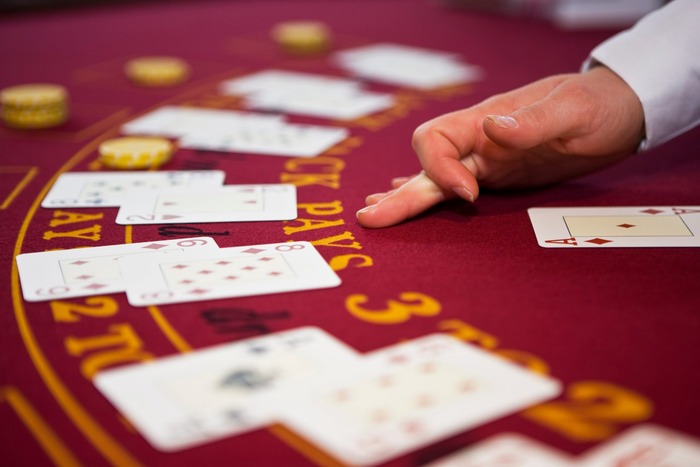
One of the most critical choices is whether to hit or stay in blackjack. Making the right choice can significantly improve your chances of winning. The secret to the right blackjack hit or stand strategy is understanding card values, the dealer’s actions, and basic probability.
/wp:paragraph
wp:image {“id”:25254,”sizeSlug”:”full”,”linkDestination”:”none”,”align”:”center”}
/wp:image
wp:heading
Understanding Blackjack Rules: Hit or Stand
/wp:heading
wp:paragraph
In order to proceed to strategy, one must first understand the blackjack rules hit or stand choices are based on. Blackjack rules are such that the player must have a hand value as close to 21 as possible without going over. In every round, you’re dealt two cards and must determine whether you should hit and be dealt another card or stand and retain the cards you have.
/wp:paragraph
wp:list
- wp:list-item
- Hit: You want to be dealt another card to increase your total in your hand.
- Stand (Stay): You leave your hand as it is, which completes your turn.
/wp:list-item
wp:list-item
/wp:list-item
/wp:list
wp:paragraph
The dealer has strict guidelines: hit on 16 or below and stand on 17 or above. That is why hit or stand blackjack decisions are not only reliant on your cards but also the face-up card of the dealer.
/wp:paragraph
wp:heading
The Basic Hit or Stand Blackjack Strategy
/wp:heading
wp:paragraph
The basis of maximal play is basic strategy—a collection of mathematically computed rules that instruct you about the best action for any particular hand. This table is based on your playing a standard six-deck game where the dealer also stands on a soft 17.
/wp:paragraph
wp:paragraph
Following is a quick introduction to the hit or stand blackjack approach for common player hands:
/wp:paragraph
wp:heading {“level”:3}
Hard Totals (There is no Ace or Ace equals 1)
/wp:heading
wp:list
- wp:list-item
- 8 or less: Always hit.
- 9: Hit unless dealer is 3–6, then double if allowed.
- 10 or 11: Hit unless you can double and dealer has a lower card.
- 12–16: Stand if dealer is 2–6 (they might bust), hit if dealer is 7–Ace.
- 17 and above: Always stand.
/wp:list-item
wp:list-item
/wp:list-item
wp:list-item
/wp:list-item
wp:list-item
/wp:list-item
wp:list-item
/wp:list-item
/wp:list
wp:heading {“level”:3}
Soft Totals (Includes one Ace worth 11)
/wp:heading
wp:list
- wp:list-item
- Ace-2 to Ace-6: Hit; double against dealer 4–6 if allowed.
- Ace-7: Stand if dealer upcard is 2, 7, or 8; hit if dealer upcard is 9–Ace; double against 3–6.
- Ace-8 or Ace-9: Stand always.
- Pairs (Which may be split)
/wp:list-item
wp:list-item
/wp:list-item
wp:list-item
/wp:list-item
wp:list-item
/wp:list-item
/wp:list
wp:paragraph
Pair splitting follows a special set of rules, but if you don’t split, use the totals strategy.
/wp:paragraph
wp:heading
Dealer Upcard: A Key Variable
/wp:heading
wp:paragraph
The upcard—the dealer’s face-up card—is the most important variable in deciding hit or stand in blackjack. Typically:
/wp:paragraph
wp:paragraph
A dealer 2–6 is a poor upcard. The dealer has a high chance to bust, therefore players should play conservatively and stand on borderline hands like 12–16.
/wp:paragraph
wp:paragraph
A dealer 7–Ace is a good upcard. The dealer has a likely chance to hit a good hand, therefore, players should play aggressively and hit frequently to improve their total.
/wp:paragraph
wp:image {“id”:25253,”sizeSlug”:”full”,”linkDestination”:”none”,”align”:”center”}

/wp:image
wp:heading
Blackjack Hit or Stand Chart Reference
/wp:heading
wp:paragraph
Although it is best to memorize the whole basic strategy chart, a few brief examples are given below that explain important hit/stand situations:
/wp:paragraph
wp:list
- wp:list-item
- Player has 16, dealer shows 10: Hit.
- Player has 12, dealer shows 4: Stand.
- Player has Ace-7 (soft 18), dealer shows 9: Hit.
- Player has 13, dealer shows 6: Stand.
- Player has 11, dealer shows 6: Double if possible, otherwise hit.
/wp:list-item
wp:list-item
/wp:list-item
wp:list-item
/wp:list-item
wp:list-item
/wp:list-item
wp:list-item
/wp:list-item
/wp:list
wp:heading
Is 14 Hit or Stand in Blackjack?
/wp:heading
wp:paragraph
One of the most frequent questions asked by new players is: Does 14 hit or stand in blackjack?
/wp:paragraph
wp:paragraph
It is all a matter of the dealer’s upcard:
/wp:paragraph
wp:list
- wp:list-item
- If the dealer’s upcard is 2–6, stand. You’re hoping that they bust.
- If the dealer’s upcard is 7–Ace, hit. Your 14 likely can’t win unless things improve.
- Thus, 14 is a good old marginal hand that depends upon knowledge of the dealer’s card.
/wp:list-item
wp:list-item
/wp:list-item
wp:list-item
/wp:list-item
/wp:list
wp:heading
How Many Times Should You Hit in Blackjack?
/wp:heading
wp:paragraph
There isn’t a specific number of times to hit in blackjack. The number is dependent on:
/wp:paragraph
wp:list
- wp:list-item
- Your hand total
- If it’s a soft or hard hand
- Dealer upcard
/wp:list-item
wp:list-item
/wp:list-item
wp:list-item
/wp:list-item
/wp:list
wp:paragraph
For example, in a tough 12 vs. dealer 2, you might be through with just one hit. Still, in soft 17 (Ace-6) vs. dealer 9, you can hit twice or more until reaching a favorable position or bust. Use hit or stand blackjack charts to make each decision.
/wp:paragraph
wp:heading
When to Hit or Stand in Blackjack: Summary
/wp:heading
wp:paragraph
Here is a quick cheat sheet to remind you of the blackjack hit or stand fundamentals:
/wp:paragraph
wp:table
| Your Hand | Dealer’s Upcard | Recommended Action |
| 12–16 | 2–6 | Stand |
| 12–16 | 7–Ace | Hit |
| 17+ | Any | Stand |
| 11 or fewer | Any | Hit or Double |
| Soft 18 | 2, 7, 8 | Stand |
| Soft 18 | 3–6 | Double (if allowed) |
| Soft 18 | 9–Ace | Hit |
/wp:table
wp:heading
Mastering Blackjack Hand Signals
/wp:heading
wp:paragraph
If you’re playing in a live casino, knowing when to hit or stand is not only about strategy—it’s also communication. Players need to use normal hand signals to communicate clearly to the dealer to avoid confusion or dispute.
/wp:paragraph
wp:paragraph
To learn the correct gestures for hitting, standing, doubling, and more, read this article on blackjack hand signals.
/wp:paragraph
wp:paragraph
Knowing when to hit or stand in blackjack isn’t a guessing game—it’s a game of math and discipline. By playing basic strategy and adjusting based on the dealer’s upcard and your hand composition, you can make the best possible choices every time. This doesn’t guarantee a win every time, but it minimizes the house edge and maximizes your long-term wins.
/wp:paragraph
wp:paragraph
By learning the rules and applying the hit or stand blackjack strategy correctly, you’ll be playing the right move each time.
/wp:paragraph
wp:heading
FAQ
/wp:heading
wp:heading {“level”:3}
1. When Do you Hit or Stand Blackjack?
/wp:heading
wp:paragraph
Employ basic strategy: stand on 12–16 versus a weak dealer (2–6), and hit same hands versus a strong dealer (7–Ace). Always hit on 11 or less.
/wp:paragraph
wp:heading {“level”:3}
2. Is 14 Hit or Stand Blackjack?
/wp:heading
wp:paragraph
Hit if the dealer’s upcard is 7–Ace. Stand if the dealer’s upcard is 2–6.
/wp:paragraph
wp:heading {“level”:3}
3. How Often Should I Hit in Blackjack?
/wp:heading
wp:paragraph
There isn’t one. Hit until your hand will likely win against the dealer’s likely hand without busting. Use a strategy chart for special cases.
/wp:paragraph
wp:heading {“level”:3}
4. What Is a Soft Hand in Blackjack?
/wp:heading
wp:paragraph
A hand containing an Ace as a value of 11. Soft hands are more flexible since you can’t bust with one hit.
/wp:paragraph
wp:heading {“level”:3}
5. Do Hit or Stand Strategy Change by Number of Decks?
/wp:heading
wp:paragraph
Somewhat. Strategy tables are most typically founded on 4–8 deck games. In single-deck blackjack, there are some minor exceptions.
/wp:paragraph
