


In 2D game art especially, teams frequently underestimate complexity because the assets feel “simple” compared to 3D, but modern 2D games rely on complex shader stacks, layered parallax systems, and animation state machines, meaning the runtime problems are very much 3D-grade.
That gap between perceived simplicity and production reality is where most 2D art challenges originate, and where budgets quietly break down.

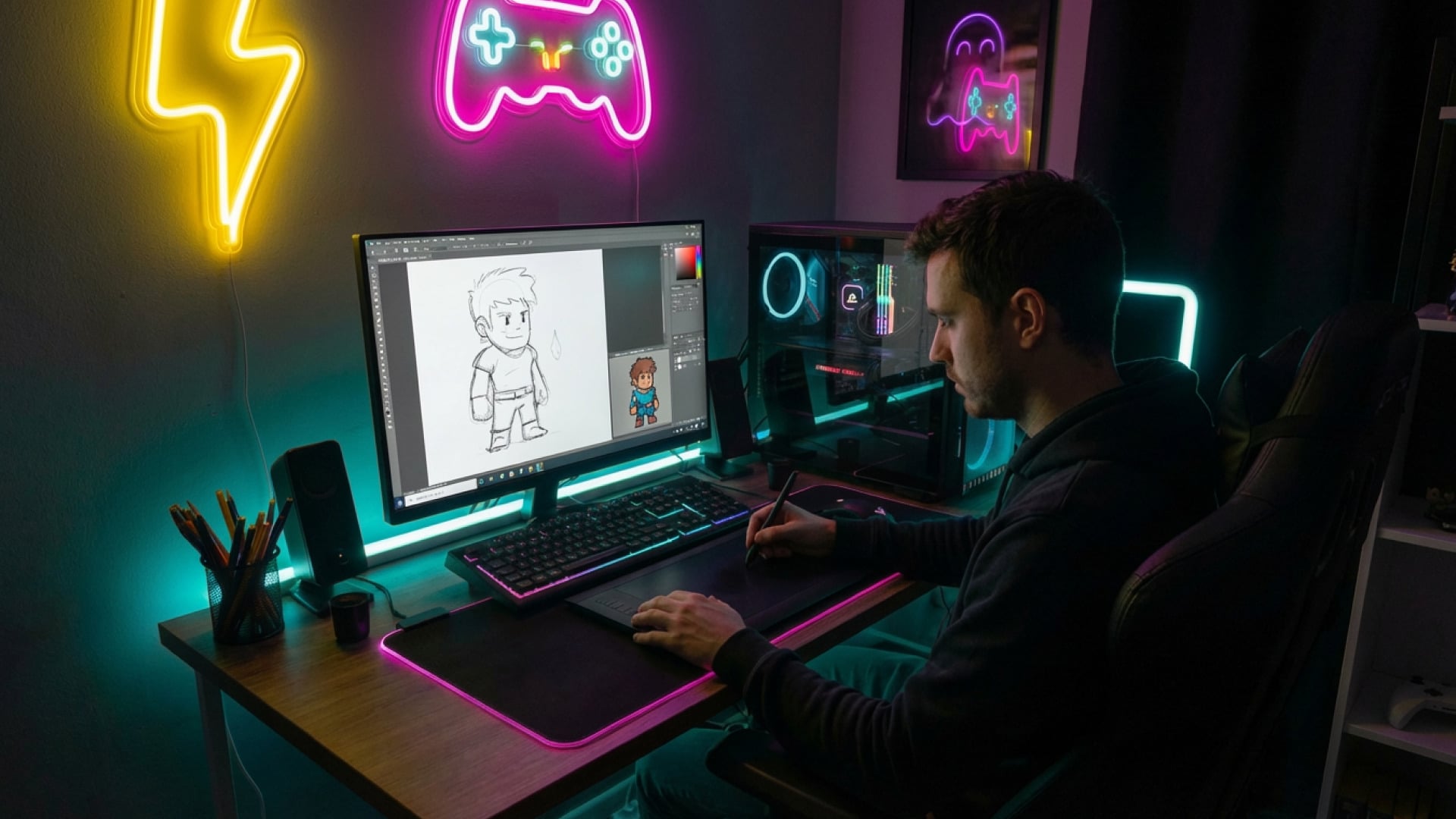
For buyers commissioning a game with a 2D art direction, understanding these challenges in advance changes how production gets planned, staffed, and managed.
This is exactly where professional 2D art services matter most – not just for producing individual assets, but for managing the pipeline, consistency, and technical requirements that 2D game art demands at scale.
5 Challenges in 2D Game Art Development
Challenge 1: Visual Consistency Breaks Down at Scale
Maintaining a consistent art style across a full game is the central challenge of 2D game art development. What looks cohesive across twenty assets in a style guide begins to drift when the same style is applied across two hundred by multiple artists working in parallel over months.
Slight palette deviations, inconsistent line weight, and varying shading density across teams and vendors create a “ship of Theseus” effect over time – the game still functions, but the visual identity becomes unstable.
Players may not describe the problem precisely, but they feel it, especially when UI, character art, and effects stop looking like they belong to the same product.
The fix is structural, not artistic. A detailed art bible, covering color palettes, line weights, shading logic, and proportion rules, needs to exist before production begins and be actively enforced throughout it.
What an effective art bible must cover:
- Exact color palette values, not just visual references
- Line weight rules by asset category: characters, environments, UI, effects
- Lighting direction and shadow style with annotated examples
- Proportion guides for characters at different scales
- Edge cases: how silhouettes, mixed elements, and special effects should be handled
Challenge 2: Animation Scope Is Consistently Underestimated
Animation is where 2D game art budgets most commonly break down. A character that appears simple to design may require fifteen to twenty distinct animation states before it is production-ready: idle, walk, run, jump, attack, hurt, death, and variations for different directions or conditions.
The key is defining must-have animations clearly and not letting scope creep in mid-production – that is where budgets most commonly spiral out of control.
Worth noting: Rig-based animation tools like Spine and Moho produce comparable quality to frame-by-frame for most game styles at a fraction of the cost. Choosing the animation approach before production begins (not during it) is one of the most consequential budget decisions in 2D game art development.
| Animation Approach | Cost Level | Best Suited For |
| Frame-by-frame | High | Cinematic quality, specific stylistic choices |
| Rig-based (Spine/Moho) | Medium | Most game characters, UI animation |
| Cut-out / puppet | Lower | Casual games, rapid iteration needs |
Challenge 3: Technical Requirements Are Treated as an Afterthought
2D art assets do not live in a portfolio. They live in an engine, on specific hardware, at defined performance budgets.
Assets that look stunning in isolation can cause frame rate drops, memory spikes, or rendering failures when they enter the engine at production scale.
Technical constraints, including texture sizes, required asset memory, shader complexity limits, and approved compression formats, need to be defined for every asset type before production begins, not discovered at integration.
Common technical failures in 2D game art development include:
- Textures exported at incorrect resolutions for target platforms
- Animation files formatted for tools the engine does not natively support
- UI elements built without accounting for different screen aspect ratios
- Sprite atlases structured in ways that cause overdraw performance issues
Each of these is significantly cheaper to prevent than to fix after integration.

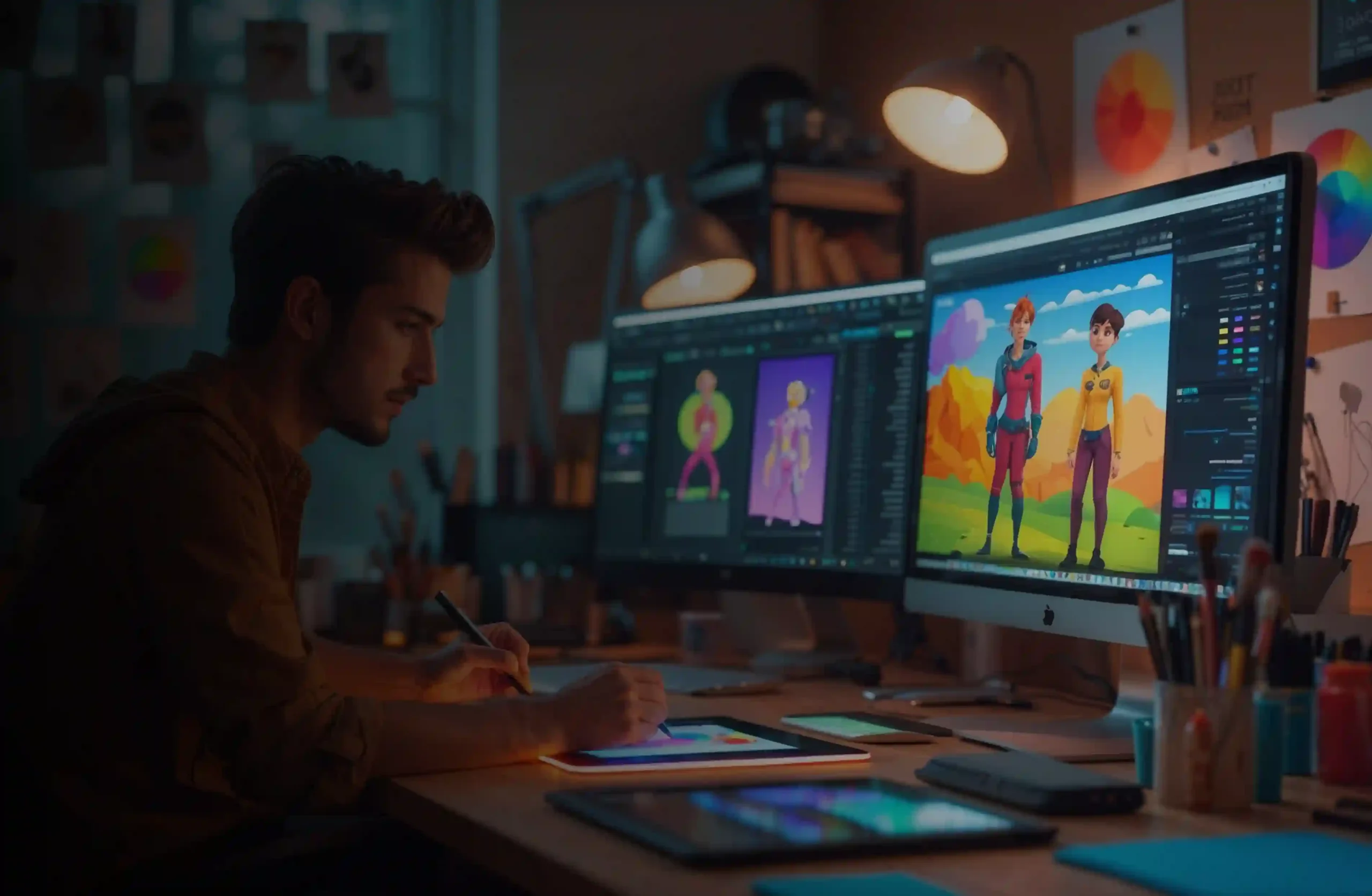
Challenge 4: Style Drift Accumulates Invisibly
Style drift is the gradual divergence that occurs when multiple artists work on the same game over time without consistent oversight.
It does not announce itself. It accumulates quietly, asset by asset, until a review reveals that characters from the first sprint look noticeably different from those produced six months later.
Studios that have shipped multiple titles already know how to enforce art bibles and format assets for engine readiness. A freelancer, however talented, rarely brings that institutional knowledge.
Regular art reviews – structured checkpoints where all recent assets are evaluated against the original style guide, not just the previous batch – catch drift before it compounds into a rework project.
Challenge 5: The Art Pipeline Is Built Under Pressure Instead of in Advance
The process by which assets move from concept through revision, export, and engine integration is often improvised as production scales up. This works adequately on small projects and becomes a significant source of delay on anything larger.
A well-designed 2D game art pipeline specifies:
- Version control practices for art files, not just code
- Naming conventions and folder structures established from day one
- Export settings and file format specifications per asset category
- Revision and approval workflows defining who signs off on what
- Handoff formats and integration procedures for the development team
When these are improvised mid-production, every new contributor adds their own conventions, and every integration introduces new inconsistencies.
Designing the pipeline before production begins consistently reduces total production time compared to building it under pressure.
What Separates Smooth 2D Productions From Difficult Ones?
The 2D game art productions that run smoothly share one consistent trait: decisions that look like creative choices – style direction, animation technique, asset format – are made early and documented formally.
Teams that treat these as details to resolve during production spend significant time and budget resolving them at exactly the wrong moment.
The challenges above appear on most 2D game art projects in some form. What varies is whether they are anticipated and planned for, or whether they surface mid-production when fixing them is both urgent and expensive.
FAQs
Why does visual consistency get harder as the game grows?
More assets means more contributors, more time between batches, and more opportunity for subtle style drift. A style that is clear in a ten-asset demo requires active enforcement to stay coherent across a five-hundred-asset production.
How do I know how many animation states a character will need?
Map every scenario in which the character appears and what state they need for each one. Include directional variations, combat states, and UI-specific versions. Most characters require significantly more states than initially estimated. Building this list before contracting animation work prevents scope expansion mid-production.
What is an art bible, and is it worth producing?
An art bible defines every visual rule governing the game’s style: color palettes, line weights, lighting logic, and proportion guides. For any game with more than one contributing artist, it is not optional. The time invested at the start is recovered many times over in avoided rework.
When should technical constraints be defined?
Before art production begins. Platform targets, performance budgets, texture size limits, and engine-specific format requirements should be documented and shared with every artist before the first production asset is created. Discovering these at integration is the most expensive time to find them.
Does animation tool choice affect the final look?
Yes, but manageably. Rig-based tools produce a different movement quality than frame-by-frame, but for most 2D game styles the difference is not significant to players. The choice matters more for budget and production speed. The key is making it deliberately before production begins, not mid-sprint.

