


The iGaming landscape has changed over the past years, with more operators bringing their entertainment options online.
More people are seeing the benefits of mobile play, but what few realize is that it’s not a matter of choosing one device. Instead, it’s a matter of smoothly transitioning between devices without losing your progress.


Players are becoming more accustomed to the multi-screen landscape, as it offers a unified hub that keeps them connected.
This means they can start playing at GGBet casino on their computer and then switch to mobile when they go out. This offers continuity without breaking their flow.
What Does Cross-Platform Play Look Like?
Modern iGaming in 2026 is not as straightforward as some may think, as laptops and computers are no longer the go-to.
Surveys show that 50-60% of adults in the US play games on their mobile devices at least once a week. However, the truth is that modern gaming is not linear, but a hybrid of the old technology and the new.
Many players start their gaming on mobile devices, only to finish the activity on their laptop later (or vice versa). For example, an iGamer might use their phone to play a quick slot on the bus and continue with the desktop version in the evening.
Cross-platform play implies switching between devices based on the target game. Slots are effective for phones and tablets due to their one-thumb play and short sessions. For games such as blackjack or live dealer games, players switch to bigger screens for better clarity.
Cross-platform play molds to a gambler’s comfort and focuses on friction reduction.
Syncing Accounts for Seamless Transition
In the past, iGaming activities were limited to one device. If a player wanted to play the same game on a different gadget, they’d no longer have access to their bonuses, limits, funds, or preferences.
Now, the system is different, with one account sharing the progression across multiple devices. Here are the reasons why players prefer the “switching model.”
Balance Is Server-Tied
Modern platforms save the data on a cloud server, protected by advanced security protocols. The player’s balance, gaming process, favorites, and other types of information stay the same, no matter the device they log in from.
It allows users to select the device based on environment and specific content, leaving mobile for quick rounds and computers for immersion and performance.
Longer Daily Play
Before cross-device switching became possible, gamblers would have to limit their daily activities based on how much computer time they had.
This meant that if they played in the morning and had to leave the house, they’d lose all progress and momentum in their games.
When players switch, they can resume games and time-sensitive tournaments. It becomes easier to play for longer throughout the day.
Faster Payment Systems
Roughly 36% of people rely on some type of desktop password manager, which makes it easier to use a payment method, but there is still some friction involved.
On the contrary, most modern mobile devices feature options such as Google Pay, Apple Pay, or crypto wallets. These enable deposits or withdrawals within seconds.
Thus, switching between devices lets users make deposits and take advantage of promos the moment they are posted.

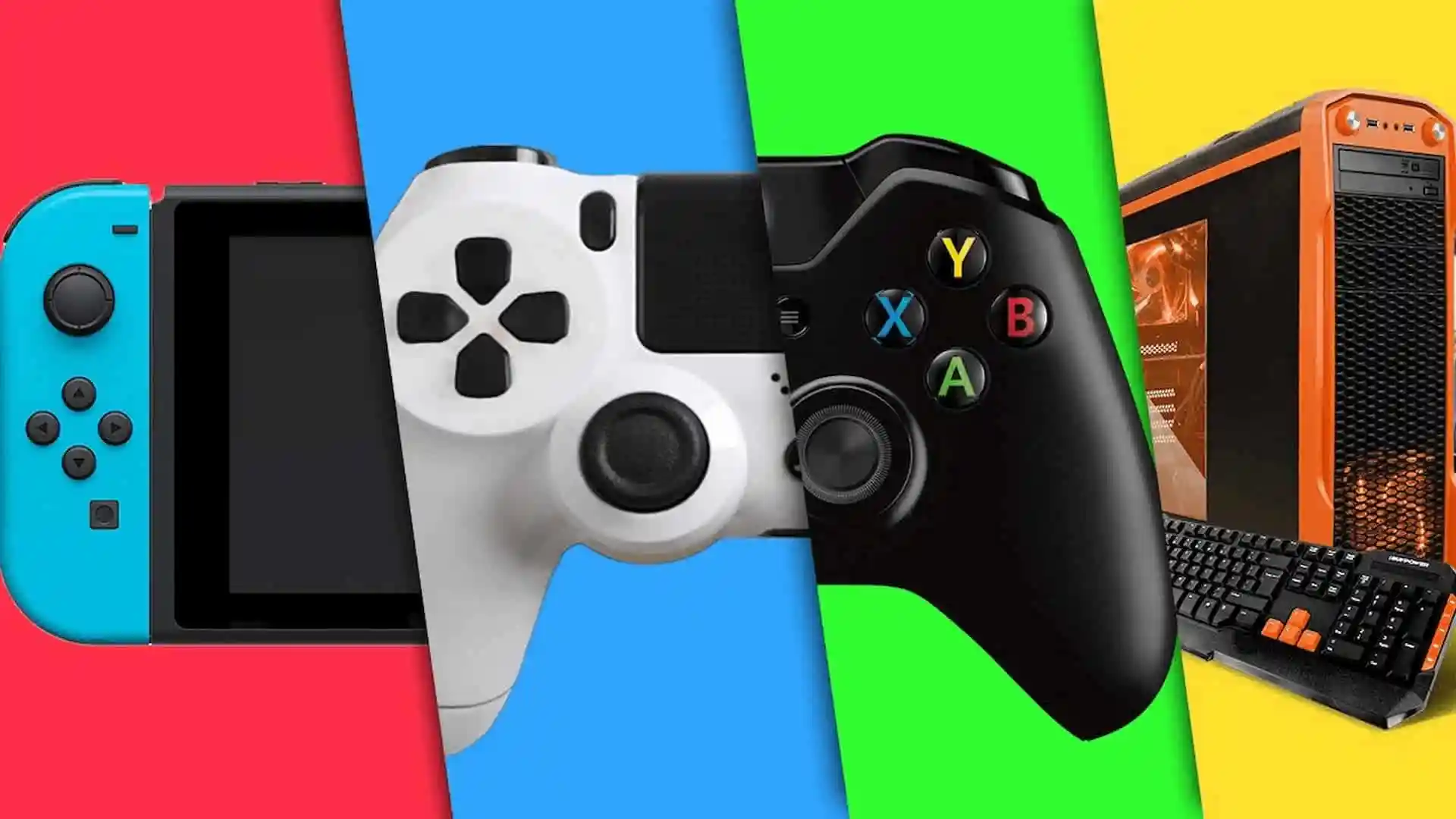
Multitasking Possibility
iGaming has become more complex in recent years. Nowadays, players have to test out strategies, follow odds, or even watch streams as they are playing. This can be difficult when only one small screen is in use.
For this reason, iGamers use multiple screens for better visibility, seeing all the relevant game data without losing momentum.
Fast Bonus Accessibility
Bonuses are bound by specific timeframes that players have to respect. Many times, these promotions are limited in number, allowing only the lucky few to take advantage of them.
Players switch between devices to be among the first to receive the bonus notifications, be it through the app or email.
Mobile access allows users to claim the promotion in time, whereas desktop play lets them meet the wagering requirements comfortably.
Why Is Responsive Design Important?
An average of 80-90% players quit a game before they even reach level 2 if the platform’s design creates unnecessary friction. This is why iGaming providers and operators focus on responsive design. Here’s how this affects cross-platform playing:
Maintains the Game Flow
Some players can start their game on a phone, only to move to a laptop and finish the round on their tablet. If the levels or progress are lost every time they try to switch devices, not only does it break the flow, but it also compromises the wins.
A responsive design maintains the interface and backs up the data, so it becomes immediately accessible, which offers uninterrupted gameplay.
Navigation Continuity
With a responsive layout, all the buttons, menus, and filters are accessible and intuitive while adapting intelligently to the screen.
For example, desktop versions have full menus, whereas mobile platforms use hamburger menus. This way, gameplay stays predictable and logical, with fewer frustrations.
Better Game Discovery
A responsive design rearranges the games and categories to fit the target screen without cutting anything off.
Modern devices focus on intuitive design elements such as vertical carousels or multi-column grids to make it easier to find new games.
This makes gamblers more likely to start games on a mobile device, as they won’t have to scroll endlessly for a new title.
The Era of Hybrid Gaming
In 2026, players will not have to choose between desktop and mobile casinos. Thanks to modern technology, they can now use both.
Platforms that offer instant device switching or sync the account data for cross-device use make iGaming more entertaining, improving player retention.
As this system grows in popularity, cross-platform play will soon be a baseline expectation rather than a mere feature.

