

wp:image {“id”:23277,”sizeSlug”:”full”,”linkDestination”:”none”,”align”:”center”}
/wp:image
wp:paragraph
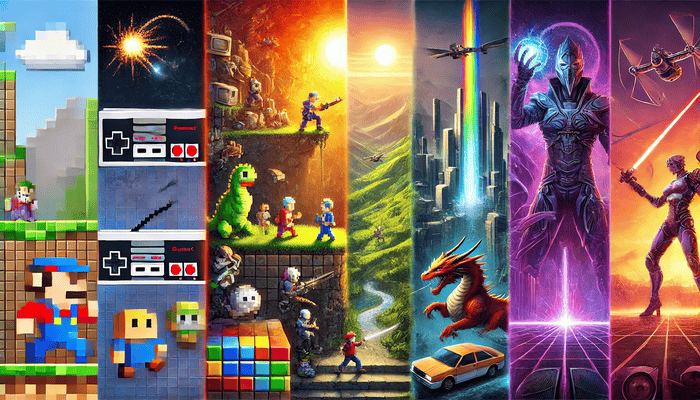
Video games have undergone a breathtaking transformation in their visual presentation over the decades. What started as basic pixelated graphics has evolved into hyper-realistic, immersive worlds that rival real life. This journey reflects not just technological advancements but also the creativity and innovation of game developers.
/wp:paragraph
wp:paragraph
From the simplicity of early pixel art to the stunning realism enabled by advanced hardware, the evolution of graphics in video games is a testament to the industry’s relentless pursuit of immersion and aesthetic appeal.
/wp:paragraph
wp:paragraph
These advancements have also influenced other industries, such as mobile applications and even cryptocurrency betting, where high-quality graphics enhance user experience and engagement, showcasing the broader impact of visual technology.
/wp:paragraph
wp:heading
The Dawn of Gaming Graphics
/wp:heading
wp:paragraph
The earliest days of gaming graphics were defined by simplicity and ingenuity. Developers worked within the confines of limited technology, using small resolutions and restricted color palettes to create visual experiences that captured players’ imaginations.
/wp:paragraph
wp:heading {“level”:3}
Pixel Art and Sprites
/wp:heading
wp:paragraph
Pixel art was the cornerstone of early video games. Each character, environment, and object was meticulously crafted using small, colored squares to form recognizable images. This technique allowed developers to maximize the limited processing power of early gaming systems.
/wp:paragraph
wp:paragraph
Games like Pac-Man and Space Invaders showcased the creative use of pixel art, relying on iconic designs that are still celebrated today.
/wp:paragraph
wp:paragraph
In Pac-Man, the maze and characters were built from simple, repeating patterns, while Space Invaders used pixelated sprites to represent alien invaders and spaceships. These games laid the groundwork for future advancements, proving that engaging visuals could be achieved even with significant limitations.
/wp:paragraph
wp:heading
The Shift to 3D Graphics
/wp:heading
wp:paragraph
The transition from 2D to 3D graphics marked a pivotal moment in gaming history. This shift opened the door to new possibilities in visual storytelling and gameplay.
/wp:paragraph
wp:heading {“level”:3}
Introduction of Polygonal Models
/wp:heading
wp:paragraph
The adoption of polygonal models revolutionized game design by enabling the creation of three-dimensional objects and environments. Unlike 2D sprites, polygons could be arranged to form shapes with depth, making worlds feel more lifelike.
/wp:paragraph
wp:paragraph
Games like Super Mario 64 and Tomb Raider were pioneers in this era. Super Mario 64 introduced a fully explorable 3D environment, while Tomb Raider featured a polygonal protagonist, Lara Croft, who moved through richly detailed environments. These innovations demonstrated the potential of 3D graphics to create immersive experiences.
/wp:paragraph
wp:heading {“level”:3}
Role of Hardware Acceleration
/wp:heading
wp:paragraph
Advancements in hardware, particularly the development of graphics processing units (GPUs), were instrumental in the evolution of 3D graphics. GPUs allowed for faster rendering and more complex visual effects, making real-time 3D graphics feasible.
/wp:paragraph
wp:paragraph
Key milestones include:
/wp:paragraph
wp:list
- wp:list-item
- NVIDIA’s GeForce series: Introduced hardware specifically designed for gaming, dramatically improving performance.
- Sony’s PlayStation consoles: Brought affordable 3D graphics to the masses.
- PC advancements: Enabled higher resolutions and better frame rates for PC gamers.
/wp:list-item
wp:list-item
/wp:list-item
wp:list-item
/wp:list-item
/wp:list
wp:paragraph
These developments set the stage for the next phase of graphical innovation.
/wp:paragraph
wp:heading
Enhancing Realism with Textures and Lighting
/wp:heading
wp:paragraph
As technology advanced, developers sought to enhance realism by improving textures and lighting techniques. These elements added depth and authenticity to virtual worlds.
/wp:paragraph
wp:heading {“level”:3}
Texture Mapping Techniques
/wp:heading
wp:paragraph
Texture mapping involves applying detailed images, or textures, to 3D models to give them a realistic appearance. Techniques like bump mapping and normal mapping further enhanced textures by simulating surface details such as wrinkles or scratches.
/wp:paragraph
wp:paragraph
For instance, in games like The Elder Scrolls V: Skyrim, texture mapping was used to create lifelike environments. The intricate designs on stone walls, foliage, and character armor added depth and immersion to the game’s vast open world.
/wp:paragraph
wp:heading {“level”:3}
Advanced Lighting Models
/wp:heading
wp:paragraph
Lighting plays a crucial role in setting the mood and realism of a game. Advanced techniques like dynamic lighting, shadow mapping, and global illumination simulate how light behaves in the real world.
/wp:paragraph
wp:paragraph
Games like The Last of Us Part II utilized advanced lighting models to create dramatic, emotionally charged scenes. Realistic shadows, reflections, and light diffusion brought the game’s environments to life, enhancing its storytelling.
/wp:paragraph
wp:heading
The Era of High-Definition and Photorealism
/wp:heading
wp:paragraph
The arrival of high-definition (HD) graphics and the push toward photorealism marked another significant leap in the evolution of video game visuals.
/wp:paragraph
wp:heading {“level”:3}
High-Definition Resolutions
/wp:heading
wp:paragraph
HD graphics brought unprecedented clarity and detail to games. Resolutions like 720p, 1080p, and eventually 4K allowed for sharper images and more intricate details.
/wp:paragraph
wp:paragraph
Games such as Red Dead Redemption 2 showcased the power of HD graphics, with landscapes so detailed they felt like living, breathing worlds. The transition to HD also emphasized the importance of art direction and visual storytelling.
/wp:paragraph
wp:heading {“level”:3}
Real-Time Ray Tracing
/wp:heading
wp:paragraph
Ray tracing technology represents the pinnacle of realism in video game graphics. By simulating the way light interacts with objects, ray tracing creates lifelike reflections, shadows, and ambient lighting.
/wp:paragraph
wp:paragraph
Titles like Cyberpunk 2077 and Control have leveraged ray tracing to deliver stunning visuals that blur the line between virtual and real. These advancements demonstrate the potential for further innovation in achieving true photorealism.
/wp:paragraph
wp:heading
Artistic Styles Beyond Realism
/wp:heading
wp:paragraph
While realism remains a dominant trend, many games embrace unique artistic styles to stand out. Stylized graphics prove that creativity can be just as impactful as photorealism.
/wp:paragraph
wp:heading {“level”:3}
Stylized Graphics and Their Impact
/wp:heading
wp:paragraph
Games like The Legend of Zelda: Breath of the Wild and Hollow Knight have adopted distinctive art styles that prioritize aesthetics over realism. These games use bold color palettes, imaginative designs, and fluid animations to create memorable experiences.
/wp:paragraph
wp:paragraph
Stylized graphics often age more gracefully than realistic visuals, as their artistic choices are less reliant on the latest technology. This approach highlights the importance of creativity in game design.
/wp:paragraph
wp:heading
Challenges and Considerations in Modern Game Graphics
/wp:heading
wp:paragraph
As game graphics become increasingly advanced, developers face new challenges and ethical considerations.
/wp:paragraph
wp:heading {“level”:3}
Development Costs and Time
/wp:heading
wp:paragraph
Creating high-quality graphics requires significant resources. The development of photorealistic visuals often involves large teams, extended timelines, and substantial budgets. This trend has raised concerns about sustainability in the industry and the pressure it places on developers.
/wp:paragraph
wp:heading {“level”:3}
Ethical Implications of Photorealism
/wp:heading
wp:paragraph
The rise of photorealistic graphics also brings ethical questions. Hyper-realistic depictions of violence, for example, can blur the line between entertainment and reality. Developers must navigate these issues carefully to ensure their creations remain responsible and impactful.
/wp:paragraph
wp:heading
Final Thoughts
/wp:heading
wp:paragraph
The evolution of graphics in video games is a journey of relentless innovation and artistic expression. From the pixelated sprites of early arcade games to the photorealistic worlds of today, the progress in visual technology has transformed how players experience games.
/wp:paragraph
wp:paragraph
As the industry continues to push the boundaries of realism and creativity, it’s clear that the best is yet to come. Balancing technological advancements with thoughtful design and storytelling will ensure that video games remain a powerful medium for entertainment and art.
/wp:paragraph
