

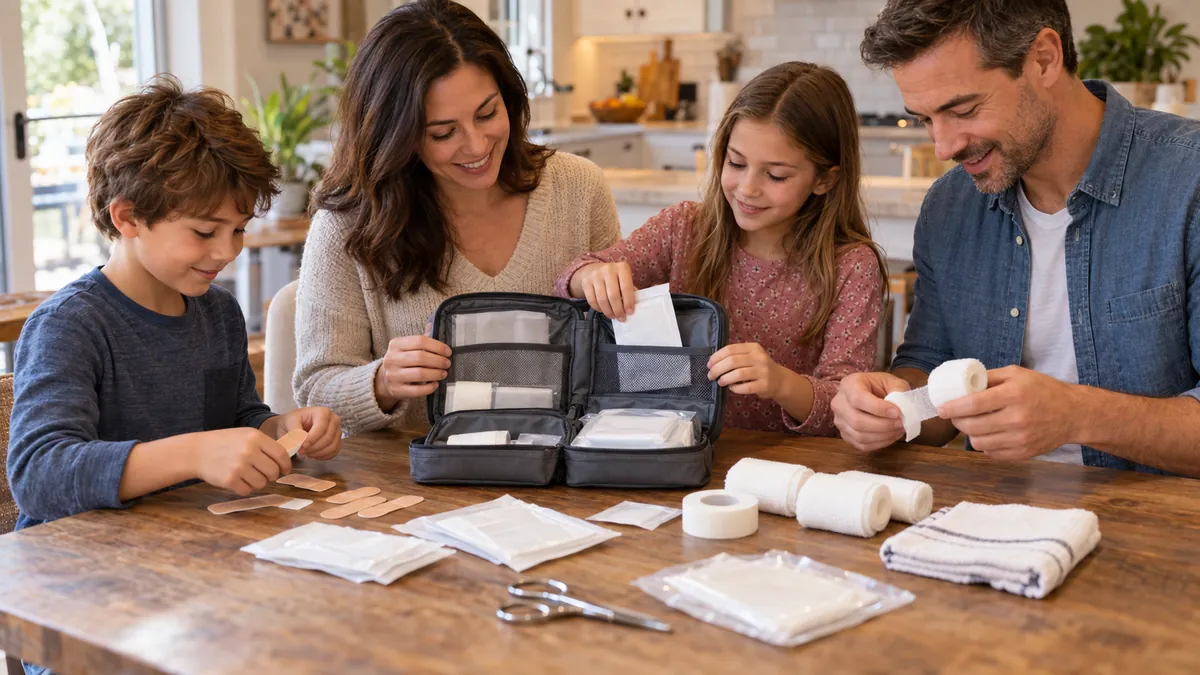
Most home emergencies are small. A burn from a hot pan. A kid who trips and splits a lip. A nasty cut while chopping veggies.
You don’t need to be a nurse to handle these moments, but you do need to know a few basics. If you want to go deeper later, you can always check our website for proper training. For now, let’s keep it simple.
This is a plain, friendly list of seven things every household should have down. No scary medical talk. Just do-this-not-that steps you can actually remember when your heart is pounding. Ready? Let’s go.
1. How Do You Stop Bleeding the Right Way?
Cuts happen all the time. The good news is that most of them stop with one simple move: pressure.
Grab a clean cloth, a paper towel, or even a shirt. Press it firmly right on the cut. Then keep pressing. Don’t peek every few seconds to see if it stopped, because lifting the cloth just restarts the bleeding.
If you can, raise the hurt arm or leg above the heart while you press. That helps slow things down. If blood soaks through the cloth, don’t pull it off. Just add another cloth on top and keep the pressure going.
Do: press hard, stay calm, keep it covered.
Don’t: poke at it, wash a deep cut under the tap for ages, or panic.
When should you worry? If the bleeding won’t stop after about ten minutes of steady pressure, or the cut is deep and gaping, it’s time to get medical help.
2. What’s the Best Way to Treat a Burn?
We’ve all grabbed a hot handle we forgot was hot. Here’s the simple fix.
Run cool water over the burn for a good 10 to 20 minutes. Not ice. Not butter. Not toothpaste. Just cool running water. It sounds too easy, but it really does calm the skin and limit the damage.
After that, cover the burn loosely with a clean, non-stick dressing or even plastic wrap in a pinch. Don’t pop any blisters that form. They’re protecting the skin underneath.
Small burns usually heal fine at home. But get medical help if the burn is bigger than the person’s palm, if it’s on the face, hands, or private areas, or if the skin looks white, leathery, or charred. Those need a professional.
3. What Do You Do If Someone Is Choking?
This one is scary, but the steps are quick. First, figure out if they can cough or talk.
If they’re coughing hard, let them cough. That’s their body doing the work. Stand close and encourage them.
If they can’t cough, can’t talk, and are grabbing their throat, you need to act. Lean them forward and give five firm back blows between the shoulder blades with the heel of your hand.
Still stuck? Switch to five abdominal thrusts (quick inward and upward pushes just above the belly button). Keep switching between the two until the object comes out or help arrives.
For a baby under one year, it’s different. Use gentle back blows and chest thrusts, never belly thrusts. If the person passes out, call 911 right away and start CPR.
4. What Are the Basics of Hands-Only CPR?
CPR sounds complicated. The simple version isn’t. And it saves lives.
In Canada, there are about 60,000 cardiac arrests outside of hospitals every year, and only around 1 in 10 people survive. That number is low partly because bystanders feel too unsure to step in. You don’t have to be one of them.
If an adult collapses, isn’t responding, and isn’t breathing normally, do this:
1. Yell for someone to call 911.
2. Put the heel of your hand in the center of the chest, with your other hand on top.
3. Push hard and fast, about 100 to 120 pushes a minute. Press down at least two inches.
4. Let the chest come all the way back up between pushes. Keep going until help arrives.
That’s hands-only CPR. No mouth-to-mouth needed for untrained helpers. If there’s an AED nearby, send someone to grab it.
Turn it on and follow the voice prompts. It’s made for regular people, and it can double someone’s chance of survival when paired with CPR.
5. What Should You Do for a Bad Fall or Head Bump?
Falls are one of the most common home accidents, especially for little kids and older adults. Most are minor. Some aren’t.
For a simple bump, apply a cold pack wrapped in a cloth to bring down the swelling. Keep the person sitting or lying calmly for a bit and watch how they’re doing.
Here’s where to pay attention. After a head bump, look out for warning signs over the next day or two:
● Throwing up more than once
● Confusion, slurred speech, or acting “off”
● A headache that keeps getting worse
● Trouble staying awake
● Unequal pupils or a seizure
If you see any of those, get medical help right away. And if someone falls and can’t move a limb, has obvious deformity, or is in severe pain, don’t force them to get up. Keep them still and call for help.
6. How Do You Spot an Allergic Reaction?
Food allergies, bee stings, new medicines. Reactions can pop up out of nowhere, and knowing the signs helps you move fast.
A mild reaction might be a few hives, some itching, or a runny nose. Annoying, but usually manageable.
A severe reaction is a true emergency. Watch for swelling of the lips, tongue, or throat, trouble breathing, a tight chest, dizziness, or a sudden rash spreading fast. This is called anaphylaxis, and it moves quickly.
If the person has an epinephrine auto-injector (like an EpiPen), help them use it right away in the outer thigh. Then call 911, even if they seem to improve, because symptoms can come back. Keep them calm and lying down with their legs raised unless they’re struggling to breathe, in which case let them sit up.
The big rule here: when in doubt, call for help. Don’t wait to see if it gets worse.
One more tip. If someone in your home has a known serious allergy, keep their auto-injector where everyone can find it, and make sure babysitters and visitors know where it is and how it works. A reaction can start fast, and a few saved seconds can change everything.
7. What Belongs in a Home First Aid Kit?
You can’t help in a hurry if you’re hunting for supplies. A simple kit fixes that. You don’t need anything fancy.
Here’s a starter list:
● Bandages in a few sizes
● Sterile gauze pads and medical tape
● Antiseptic wipes
● A pair of scissors and tweezers
● Disposable gloves
● A cold pack
● A digital thermometer
● Any personal meds your family needs
Keep it somewhere everyone can reach, not buried in a closet. Check it twice a year and toss anything expired. And write the number 911 plus poison control on the inside lid, just in case a babysitter or guest needs it.
Knowing when to call 911 is part of the kit too. Call for trouble breathing, chest pain, heavy bleeding that won’t stop, a bad reaction, or anyone who collapses. It’s always better to call and be told it’s fine than to wait too long.
Why Take the Next Step With Real Training?
Reading a list is a great start. But nothing beats practicing with your own hands. A short course lets you try compressions on a mannequin, use a practice AED, and ask questions in real time. Many programs offer blended learning, so you do the theory online and finish with one quick in-person session.
Whether you’re a busy parent, a new grad, or just someone who wants to be ready, a few hours of training pays off for life. You can find a class with Coast2Coast First Aid near you and turn these basics into real confidence.
Think about who’s in your home. A curious toddler. An aging parent. A partner who loves the kitchen a little too much.
Any one of them could have a moment where your quick, calm response makes all the difference. That’s the real reason to learn this stuff. Not fear, just love and readiness.
And here’s the best part: once you know the basics, you stop feeling helpless. A burn, a cut, a scary cough across the dinner table.
Instead of freezing, you act. That calm spreads to everyone around you, and the whole household feels safer for it.
If you are looking for first aid and CPR training in the Regina area or surrounding communities, you may reach out to Coast2Coast First Aid & Aquatics in that area.
FAQs
Q: Do I need training if I already know these basics?
A: Reading tips is a good first step, but hands-on practice makes them stick. In a real emergency, muscle memory takes over, and that only comes from practicing. A short course lets you try CPR, use an AED trainer, and feel ready to act instead of freeze.
Q: What’s the most important first aid skill to learn first?
A: Hands-only CPR is at the top of the list because it directly saves lives when someone’s heart stops. It’s simple to learn and easy to remember: push hard and fast in the center of the chest. Knowing how to stop bleeding and help a choking person comes close behind.
Q: How often should I check and restock my first aid kit?
A: Check it about twice a year. Replace anything that’s expired, used up, or dried out, like antiseptic wipes and tape. Keep the kit in an easy-to-reach spot everyone in the home knows about, and write emergency numbers on the inside lid.
Q: When should I call 911 instead of handling it at home?
A: Call 911 for trouble breathing, chest pain, heavy bleeding that won’t stop, a severe allergic reaction, a serious head injury, or anyone who collapses or won’t wake up. When you’re unsure, call anyway. It’s always safer to ask for help early than to wait too long.
Q: Can I learn first aid even with a busy schedule?
A: Yes. Many courses use blended learning, so you finish the theory online at your own pace and attend just one short in-person session for the hands-on skills. It fits easily around work and family, and most people are surprised how quickly they pick it up.
